
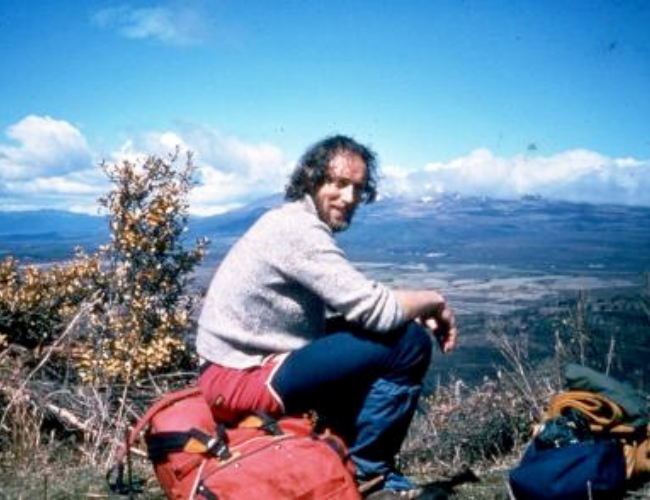
Sir Graeme Dingle reflects on the mountains he has climbed, the purpose he found, and how a Gift in your Will can help future generations realise their potential.
By Sir Graeme Dingle.
Turning 80 has made me reflect on my life, what has mattered and what I hope will continue when I am no longer here.
Our growing From the Archives Series has brought back stories of expeditions, friendships, risks, successes and a few things that could have gone badly wrong. Some memories are enjoyable. Others are painful. Together, they show how the different parts of my life led to the work I care most about today.
At the beginning, I thought mountains were the challenge.
I wanted to find out what I was capable of. I set difficult goals, went to hard places and climbed with people who were often better and more experienced than I was.
Over time, I realised those mountains were only the beginning.
Someone believed in me
I was not a confident young person. School made little sense to me, and I struggled to understand where I fitted or what I might be good at. Then a teacher named Enid Bond saw something in me that I could not yet see in myself.
She believed I could become a great artist. I did become a professional artist, but that was not the important part. For the first time, an adult had made me believe I could be good at something.
Someone believing in me helped me begin to realise my potential.
The mountains later gave me a place to test that belief. They taught me about fear, resilience, judgement, teamwork and the value of breaking an enormous challenge into achievable steps.
Sir Edmund Hillary put it well:
“It is not the mountain we conquer, but ourselves.”
That idea has proved true throughout my life.
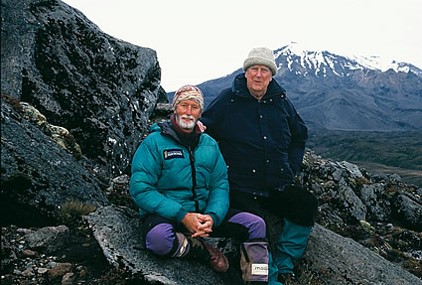
The mountains changed
One of the experiences that changed my direction came during the Winter Traverse of the Southern Alps with Jill Tremain. We spent 100 days travelling through some of New Zealand’s most difficult winter terrain.
During that journey, Jill told me:
“Life is a cup to be filled, not a measure to be drained.”
She explained, rather bluntly, that climbing mountains and collecting achievements was not enough. I would not fill my cup until I did things that were good for other people.
It took a while to get through my thick head, but she was right.
I also saw how Sir Edmund Hillary used the platform adventure had given him to serve others. His work for the people of Nepal showed me that reaching a summit was not the end of the journey. The more important question was what you chose to do with the opportunities, experience and relationships you had gained.
You can read more about the time we spent together in Nepal and on Aoraki in the From the Archives story about Sir Edmund Hillary and Sir Graeme Dingle on Aoraki.
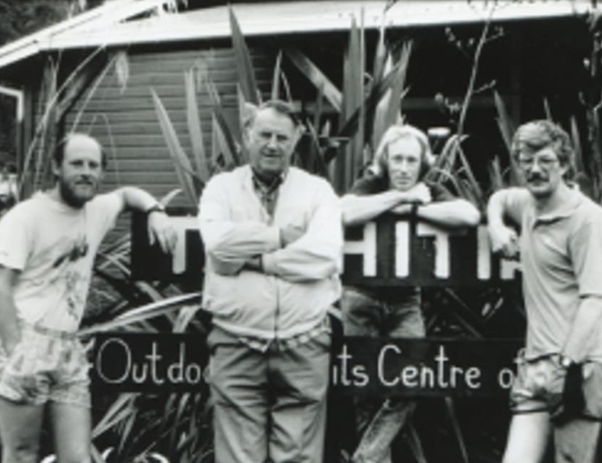
My work with young people began well before the Graeme Dingle Foundation. It included establishing what is now Hillary Outdoors and later testing new ideas through my work with young people on The Journey and the group known as the Bros.
Those experiences taught me that a difficult journey can help someone see a different future for themselves. But challenge alone is not enough. Lasting change also requires belief, trusted adults, long-term support and people who stay alongside a young person when the journey becomes difficult.
The mountains had changed.
They were no longer only the physical peaks I wanted to climb. They had become the obstacles preventing people from realising potential.
Not all mountains are on maps
When Jo-anne and I returned to New Zealand after our journey around the Arctic, we became increasingly concerned by the statistics facing young New Zealanders, including suicide, incarceration, disengagement from education and a growing sense of hopelessness.
Those statistics represented another kind of mountain. We decided we could either build a wall around ourselves and get on with our lives, or get involved. We chose to get involved.
We promised to dedicate our lives to helping young people overcome the obstacles standing between them and their potential. Just over 30 years ago, that promise led us to establish what would become the Graeme Dingle Foundation.
We wanted young people to have the challenge, encouragement, trusted relationships and sustained support they needed to discover what they were capable of.
The hardest mountains young people face today are not always made of rock, ice or snow.
They can be fear.
Self-doubt.
A lack of confidence.
Disconnection.
A feeling that they do not belong.
Uncertainty about what the future holds.
These mountains cannot always be seen, but they can still stop a young person in their tracks.
Learn more about how you can help young people Move Mountains.