
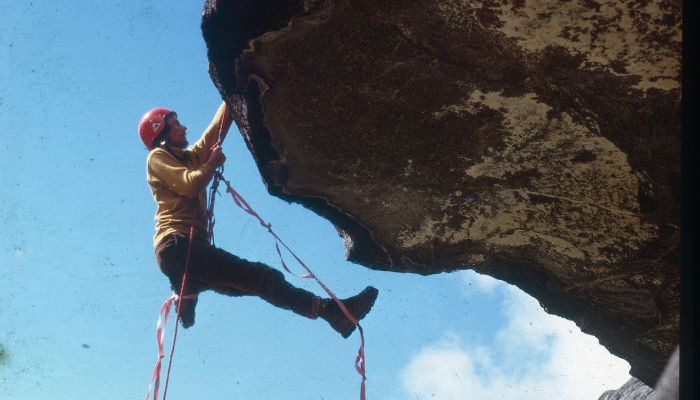
Photo by: Mike Gill
In 1974, as part of the television series The Adventure World of Sir Edmund Hillary, Graeme Dingle, Murray Jones and Peter Hillary set out to attempt something no one had done before- the first ascent of the Kaipo Wall.
Rising 4,000 feet straight above the Kaipo River on the remote West Coast of New Zealand’s South Island, the wall was a daunting, untouched face of granite. At the time, it had never been climbed.
But reaching the climb was an expedition in itself.
The team first travelled down the Hollyford River, navigating around 50 kilometres of river systems and dangerous rapids that had likely never been kayaked before. From there, they crossed Lake McKerrow, travelled to the coast, and eventually made their way toward the Kaipo River. In true expedition style, and with a little filmmaking practicality, the final approach to the base of the wall was made by helicopter.
Among the crew documenting the journey was cameraman Roger Donaldson, who would later become one of New Zealand’s most successful filmmakers, directing Hollywood films including Sleeping Dogs, 13 Days, and The Bounty.
The climb itself was planned as a fast, single-day ascent, meaning every piece of gear had to be carefully considered. Weight mattered. Efficiency mattered. Speed mattered. There would be no room for error on a wall this remote.
The team split into two groups. Graeme Dingle and Murray Jones tackled the main face alongside climber and cameraman Mike Gill, while the rest of the expedition took easier ground to the east to reach the Ngapunatoru snow plateau above.
What they expected to be an incredibly difficult climb unfolded differently. Moving quickly and efficiently, Dingle, Jones and Gill climbed the wall in just 10 hours, eventually topping out onto the snow plateau high above the valley below.
At the summit they reunited with Sir Edmund Hillary and the rest of the team. But the achievement quickly gave way to survival.
The weather closed in fast.
As snow and torrential rain battered the mountain, the team dug a snow cave for shelter. Trapped by the storm, they remained there for an entire week waiting for conditions to improve.
Years later, Roger Donaldson credited Graeme Dingle with saving his feet from severe frostbite during the storm by keeping them warm against his stomach through the freezing days and nights inside the cave.
The successful ascent of the Kaipo Wall, along with many others, cemented the Dingle and Jones climbing partnership as one of the greatest of that era.
It was more than a first ascent. It was a story of skill, teamwork, adaptability and resilience in one of the harshest environments imaginable, values that continue to inspire the spirit of the Graeme Dingle Foundation.
Ready to move mountains? Click here to take the challenge and support our tamariki and rangatahi.